OOH Advertising in Belgium and Luxembourg: An Overview
Introduction
Date
Author
billups
Type
Articles

The Out-of-Home (OOH) advertising market across Belgium and Luxembourg is entering a period of renewed relevance and digital transformation. From the growing presence of digital screens to shifts in regulatory frameworks, the region is increasingly defined by hyperlocal nuance, language diversity, and an appetite for measurable, creatively bold campaigns. As part of its ongoing market intelligence series, billups sat down with Koen Van Rhijn, Managing Director - Belgium at billups, a key voice in the Belgian and Luxembourg markets, to discuss current dynamics and what advertisers should know.
Table of Contents
Regional Dynamics: Density, Language, and Locality
Digital Growth, Programmatic Caution
Transit and Urban Footfall: A Strategic Mix
Creative Best Practices: Cultural Relevance and Visibility
Demographics and Psychographics: Who's Watching
Challenges: Regulatory and Structural
What’s Next — and What’s Missing
Key Takeaways
Density Defines Planning
Compact geography and high urban concentration make national coverage with smaller formats highly effective.Digital Is Growing — Hybrid Is Smarter
Digital represents ~37% of the market, but combining static and digital delivers stronger cost efficiency. Programmatic (~7%) remains an emerging field.Access Is Concentrated
JCDecaux and B Media Outdoor largely control inventory. In Luxembourg, limited supply makes early booking essential.Transit Drives Reach
Trams, rail stations, and commuter corridors provide strong urban coverage — often more efficiently than metro-only strategies.Language Impacts Performance
French, Dutch, and German adaptations improve recall and trust versus English-only campaigns.Regulation Requires Foresight
Permit complexity and visual policies shape format availability and execution timelines.
Regional Dynamics: Density, Language, and Locality
Benelux is small in scale but dense in population and infrastructure. Across Belgium and Luxembourg, urban areas remain the focal point for OOH inventory. In Belgium, formats under two square meters are dominant, a trend driven both by regulation and practicality. As Koen noted, "The big formats are getting fewer. Twenty-square-meter displays are slowly disappearing, and we see a strong pivot toward digital screens in smaller formats."
This trend is not only about screen size. The format shift parallels broader behavioural changes in how people move, engage, and consume. Public transport continues to play a central role in Belgium, where regional tram systems, buses, and even coastal tramways provide reliable advertising canvases.
But unlike some markets where large national vendors hold a monopoly, Belgium is marked by both consolidation and fragmentation. Two players, JCDecaux and B Media Outdoor, control about 80% of the two-square-meter inventory. Yet a layer of smaller players offers highly specific placements like sports clubs, event spaces, or regional transit.
Luxembourg, while significantly smaller, poses a different challenge: scarcity. "If you don’t book early in Luxembourg, you’ll simply miss out," Koen said. Inventory is limited, and competition is high.
The region’s multilingualism also creates complexity. Campaigns in Belgium must often navigate French, Dutch, and sometimes German. "You're always safe using the local language," Koen advised. "English might work, but in most cases, localised messaging resonates better."
Digital Growth, Programmatic Caution
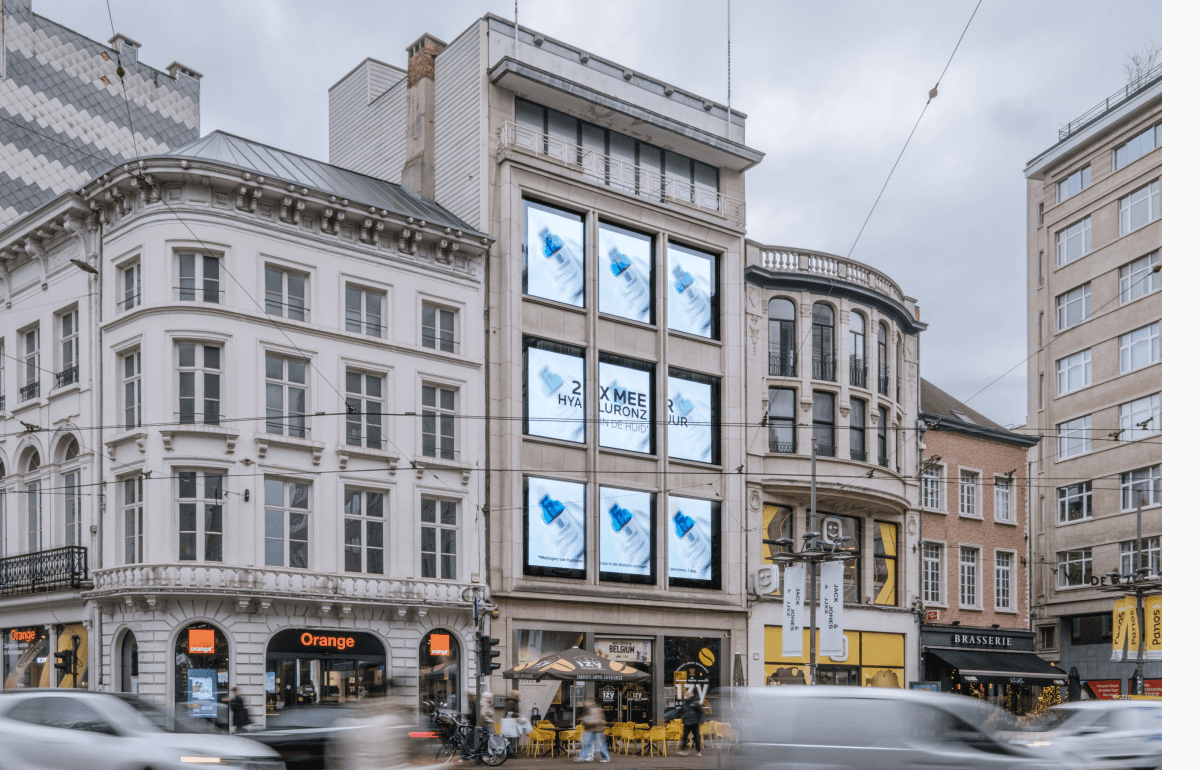
Belgium continues to invest in digital OOH, with digital formats now representing approximately 37% of the total market share. That growth is mirrored by a measured approach to programmatic buying.
Advertisers are leaning into hybrid models that combine static and digital formats, largely to balance CPM costs. Koen explained: "If you go only digital, your CPM will be significantly higher. That’s why we combine it strategically with paper."
Programmatic’s share remains modest at 7%, but its trajectory is upward. Yet, brands are advised to proceed with clarity. Vendors often highlight programmatic’s flexibility using data triggers, time-of-day scheduling, and guaranteed visibility, but pricing models remain opaque, and inventory availability is inconsistent.
Transit and Urban Footfall: A Strategic Mix
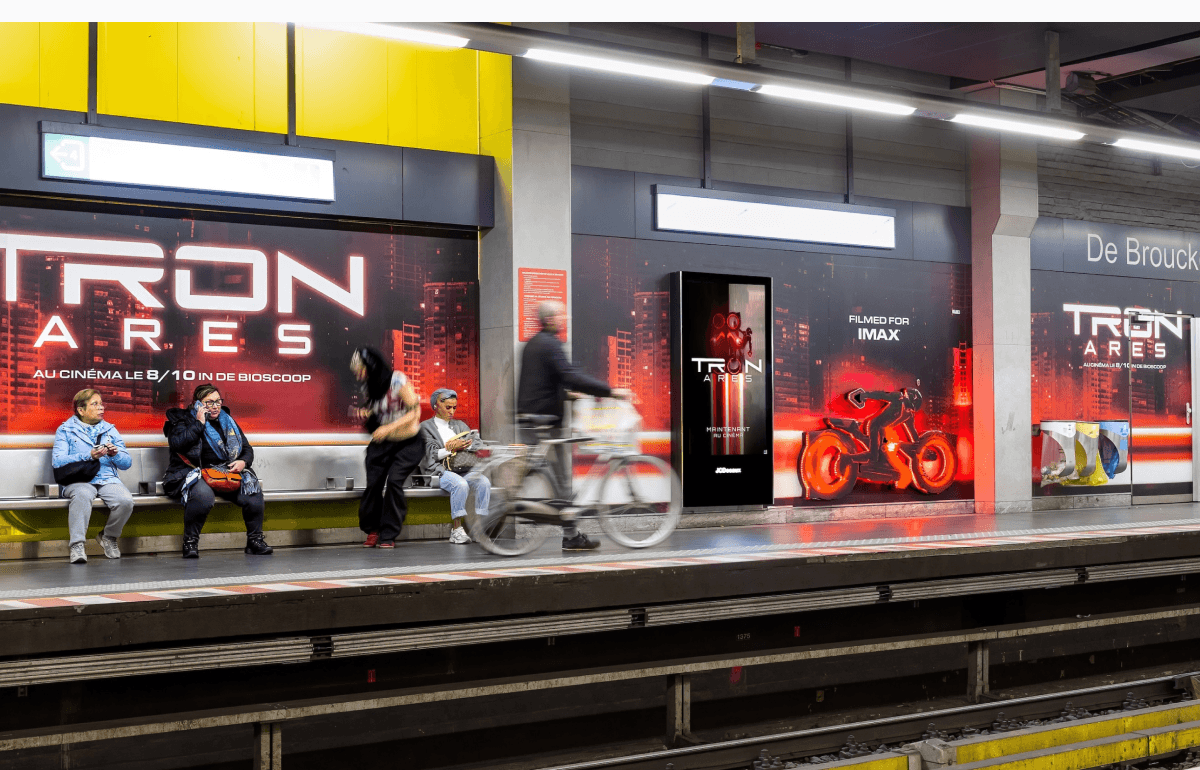
Transit formats are especially potent in Belgium and Luxembourg, particularly in Belgium. However, their availability and pricing differ by region. The Brussels metro is prohibitively expensive, prompting many advertisers to seek alternative placements in nearby train stations.
"If you're targeting students or young commuters, going into Brussels train stations can deliver similar reach at a much better CPM than metro," Koen noted.

Additional touchpoints include wrapped trams and buses in Antwerp, Ghent, and along the Belgian coast. Koen pointed out the coastal tram line as an often-overlooked asset: "It’s one of the longest in the world, and in summer, it's incredibly effective."
International environments such as Brussels Airport and major rail lines (Eurostar, Thalys) provide access to high-income, cross-border travellers, while second-tier airports like Charleroi attract different demographics, including value-focused flyers.
Creative Best Practices: Cultural Relevance and Visibility
In the Benelux market, cultural nuance isn’t optional. Campaigns that succeed often lean into location, timing, and relevance. While the Brussels Mix event offered insight into DOOH engagement, with 78% of Belgians noticing screens and over 70% taking action, Koen’s commentary reinforces the point: creatives must feel local.
Many campaigns incorporate localised visuals, timed messaging (aligned with festivals or sports events), and hybrid media plans that blend visibility with strategic repetition. National campaigns remain the default in Belgium due to geographic density, but they often require layered execution across formats.
Demographics and Psychographics: Who's Watching
Across Belgium and Luxembourg, population density, age distribution, and media consumption habits shape how OOH is received. Belgium has a population approaching 11 million, while Luxembourg remains compact yet highly affluent. Urbanisation is high, and younger audiences are mobile, tech-savvy, and environmentally conscious.
Belgian consumers are value-driven but research-oriented, often comparing and reading reviews before making a decision. Sustainability and ethics heavily factor into purchasing decisions. Meanwhile, multilingualism is both a challenge and an opportunity: communication in native languages improves recall and trust.
OOH campaigns that lean into local context, linguistic, cultural, and seasonal are more likely to drive engagement and action.
Challenges: Regulatory and Structural
Permit complexity, visual regulation, and urban aesthetic policies often slow campaign rollout. Koen highlighted that cities may impose different rules, but overall, Belgium operates under national-level regulation, unlike the more decentralised Netherlands.
"Sometimes clients ask if they should do city campaigns or national. Usually, national wins, because in Belgium, people live so densely that national coverage with smaller formats makes more sense."

Furthermore, audience fatigue is becoming a real concern. As screen saturation increases, campaigns that lack contextual or creative sharpness risk being ignored.
What’s Next — and What’s Missing
As billups continues to expand its localised market intelligence series, the focus remains clear: helping brands navigate not only the media mix but the cultural, regulatory, and behavioural dynamics that shape OOH success in each region.
Belgium and Luxembourg show that effective OOH planning is rarely about scale alone. It’s about understanding how density, language, infrastructure, and policy intersect and planning with that context in mind. If you’re navigating these markets or planning to, getting in touch with us might just make the path a little clearer.
Our news


