OOH Trends 2026: The Year Outdoor Becomes a Global Operating System
Introduction
Date
Author
Debodita Bose
Type
Articles
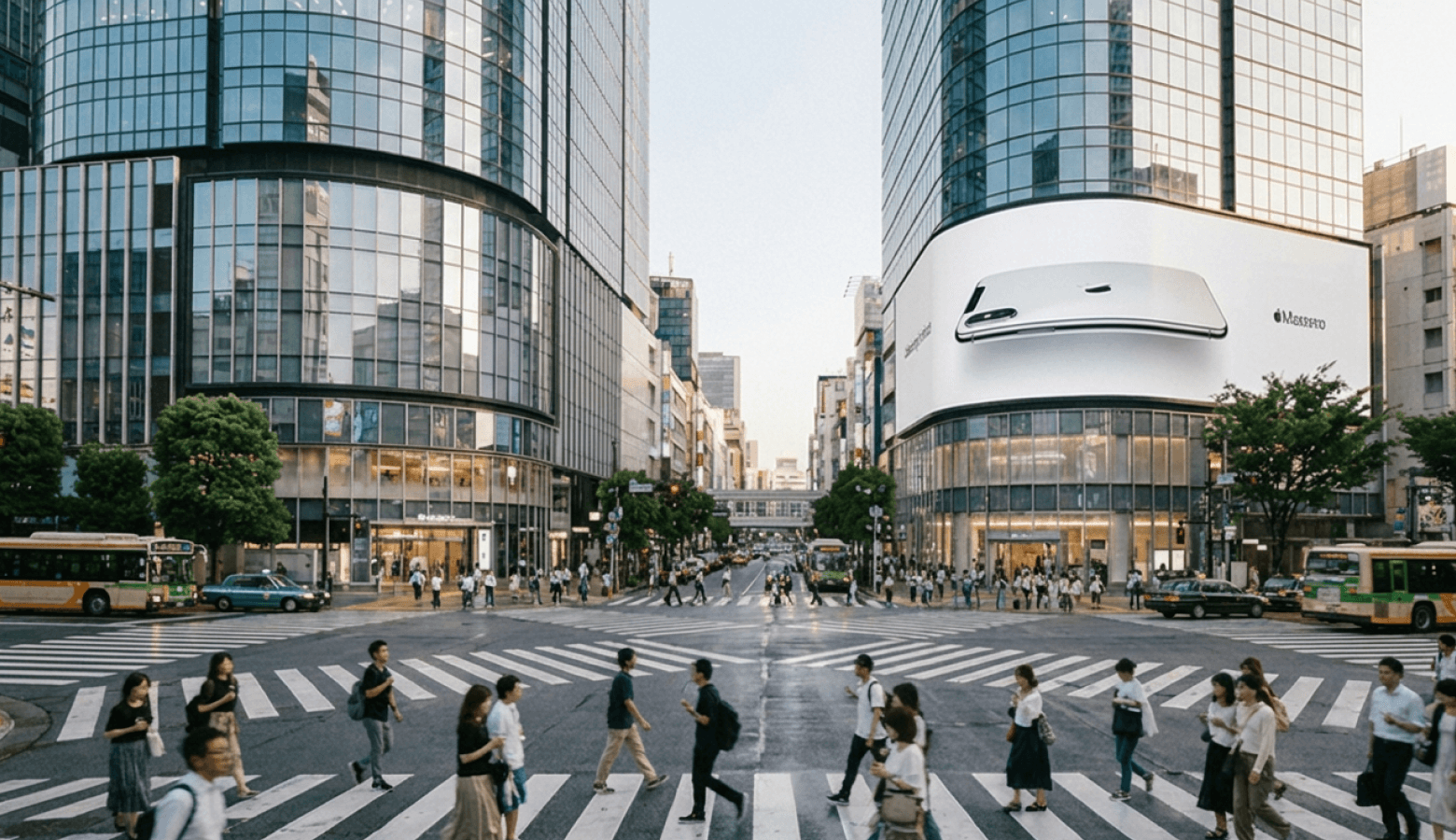
How liquid audiences, smart systems, and carbon performance are reshaping the next era of media.
Out-of-Home (OOH) advertising enters 2026 at a pivotal moment. The world’s most trusted offline medium is no longer just about placements; it’s becoming a global media infrastructure. Audiences move differently, tech is invisible but essential, and sustainability is no longer optional.
“OOH is evolving into a global operating system,” says David Krupp, Global CEO.
“The real unlock in 2026 is how audience intelligence, automation, and sustainability finally work together at scale.”
Across continents, the demand is clear: brands want precision, accountability, and clarity, not just coverage.
Table of Contents
1. Introduction
2. The Four Global Shifts Defining OOH in 2026
3. Regional Predictions: What’s ahead for North America, EMEA, APAC, and LATAM.
4. From Global Brands → Global Orchestration
5. What Brands Should Do in 2026
6. The Risks Ahead
7. The Outlook
Key Takeaways
OOH is no longer a channel — it’s a global operating system integrating audiences, automation, and carbon performance.
Audience-first planning replaces place-first buying, with liquid audience movement shaping strategy in every mature market.
Programmatic DOOH becomes the default, not the innovation, redefining how creative, data, and measurement must work together.
Carbon visibility becomes a competitive advantage, with Europe and APAC leading the shift toward energy scoring and sustainable inventory.
Regional hubs (Amsterdam, Dubai, Singapore, Toronto) emerge as the engines of global orchestration and cross-border consistency.
North America leads on accountability, EMEA leads on regulation and sustainability, APAC leads on integration and innovation.
Dynamic creative becomes non-negotiable, driven by mobile behaviors, multilingual audiences, and real-time data triggers.
OOH gains marketing-stack parity with digital channels, integrating attribution, attention metrics, and cross-platform reporting.
The brands that win in 2026 will organize regionally, act globally, and optimize dynamically — with sustainability and audience intelligence at the core.
The Four Global Shifts Defining OOH in 2026
1. From Locations → Liquid Audiences
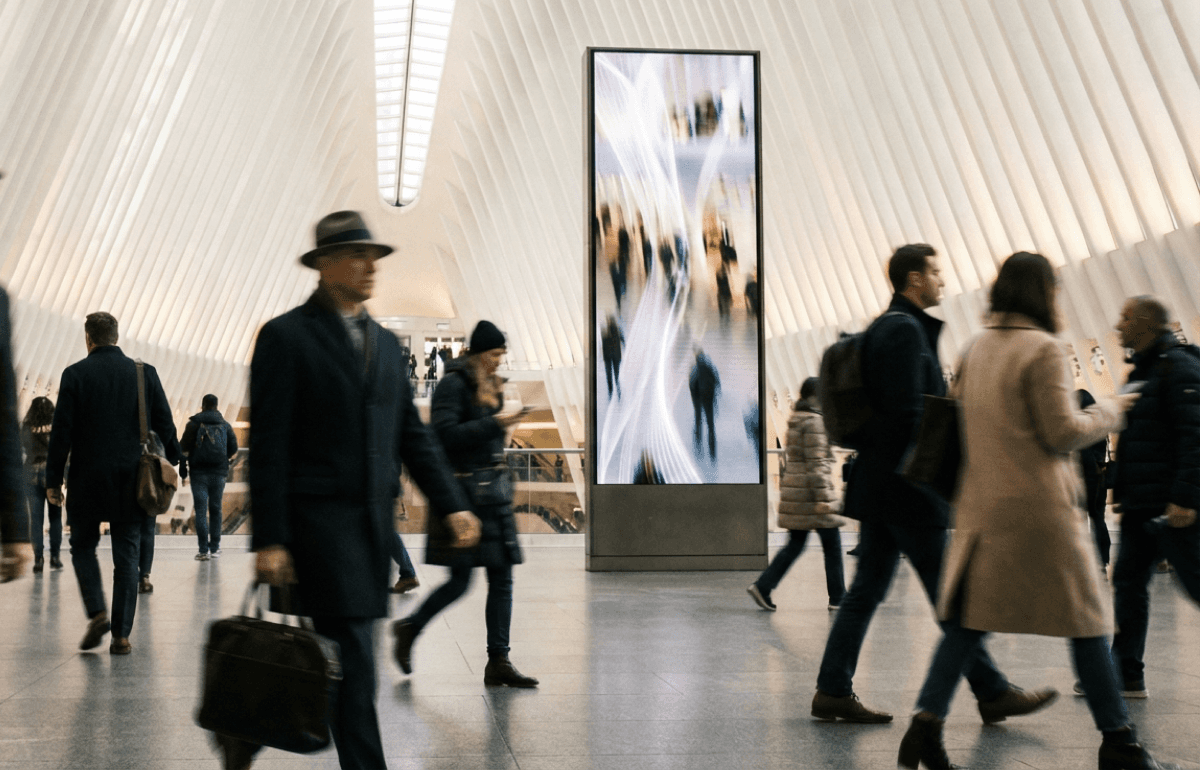
Brands aren’t buying places anymore, they’re buying people on the move. In New York, Tokyo, and London, campaigns now begin with:
Commuting patterns
Lifestyle tribes
Tourism surges
Income and behavior clusters
Synthetic audience models trained on AI-generated scenarios
The question is no longer “Where is our billboard?” but “Who are we reaching in motion, and why?”
Add to this a new force: AI agents. As consumer decisions are increasingly shaped by digital assistants and voice-enabled suggestions, OOH must adapt to intention-led movement patterns. Reaching audiences where their AI says to go is the next frontier.
Global stat: In advanced markets, over 70% of DOOH now starts with audience segments rather than static locations. (billups internal forecast, 2025)
2. From Digital Displays → Smart Systems
Programmatic is table stakes. The new frontier is orchestration: APIs, AI-driven creative, and multi-market optimizations.
“Programmatic isn’t a future promise — it’s the expectation,” says Jason Kiefer, Global Chief Business Officer.
“The real challenge now is whether brands can adapt their creative, data, and measurement fast enough.”
The next evolution is less about buying media and more about orchestrating it:
Expect:
Real-time creative swaps
Automated flighting
Cross-platform attribution (OOH + mobile + CTV)
Dynamic formats optimized using Generative Engine Optimization (GEO) principles, ensuring creatives are machine-legible as well as audience-aware
Programmatic DOOH is projected to exceed $33.3B globally by 2026. (Research & Markets, 2024)
Retail media networks are also entering the picture, linking in-store screens with out-of-store pathways to maximize intent-led footfall and closed-loop attribution. In fact, the DOOH category is expected to gain over 40% in revenue by 2027, much of it through retail-integrated experiences. (Caretta Research, 2024)
3. From Carbon Reporting → Carbon Performance
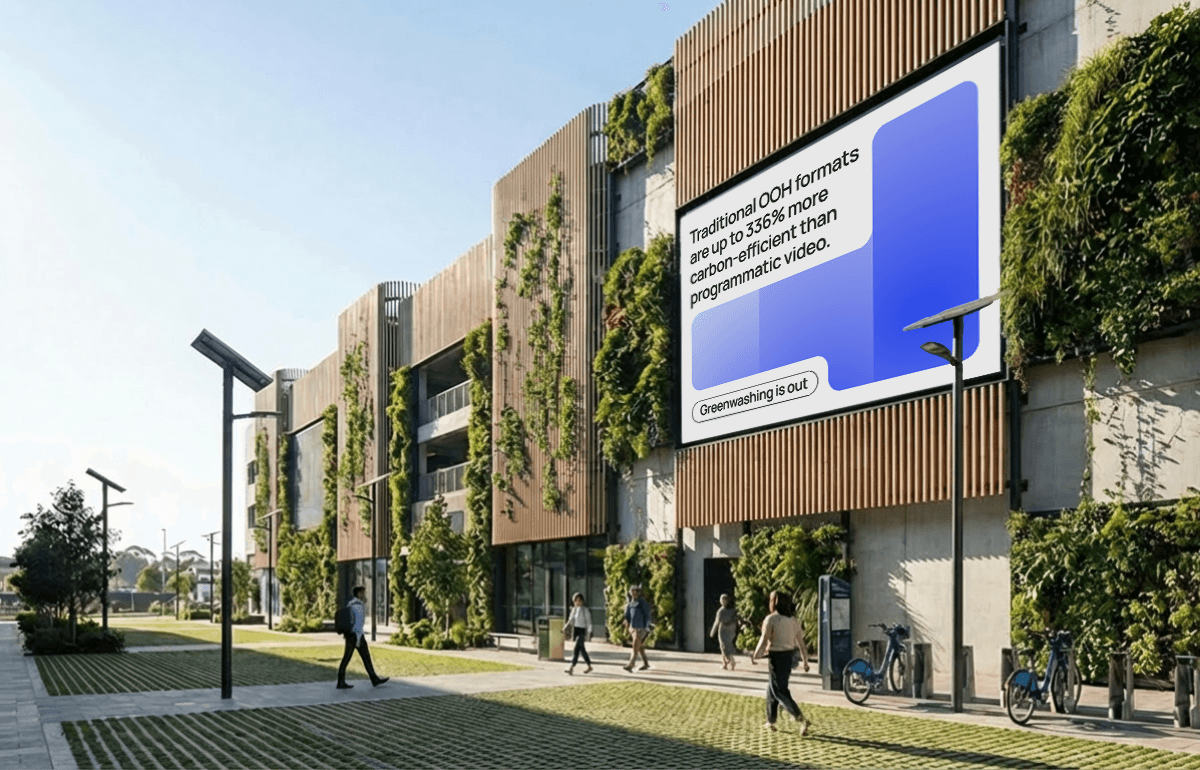
Greenwashing is out. Carbon transparency is currency.
Across Europe and Asia, media owners are scoring screens for energy use, reporting real-time emissions, and defaulting to green infrastructure.
Smart cities are enforcing:
DOOH energy caps
Solar-first builds
Carbon dashboards for buyers
OOH is quietly becoming the most carbon-visible medium. In the UK, it already accounts for just 3.3% of advertising’s total power consumption and under 3.5% of its carbon footprint. (Outsmart/KPMG, 2023)
Recent research from billups and Cedara reveals that traditional OOH formats are up to 336% more carbon-efficient than programmatic video. (WorldOOH.org, 2024)
4. From Global Brands → Global Orchestration
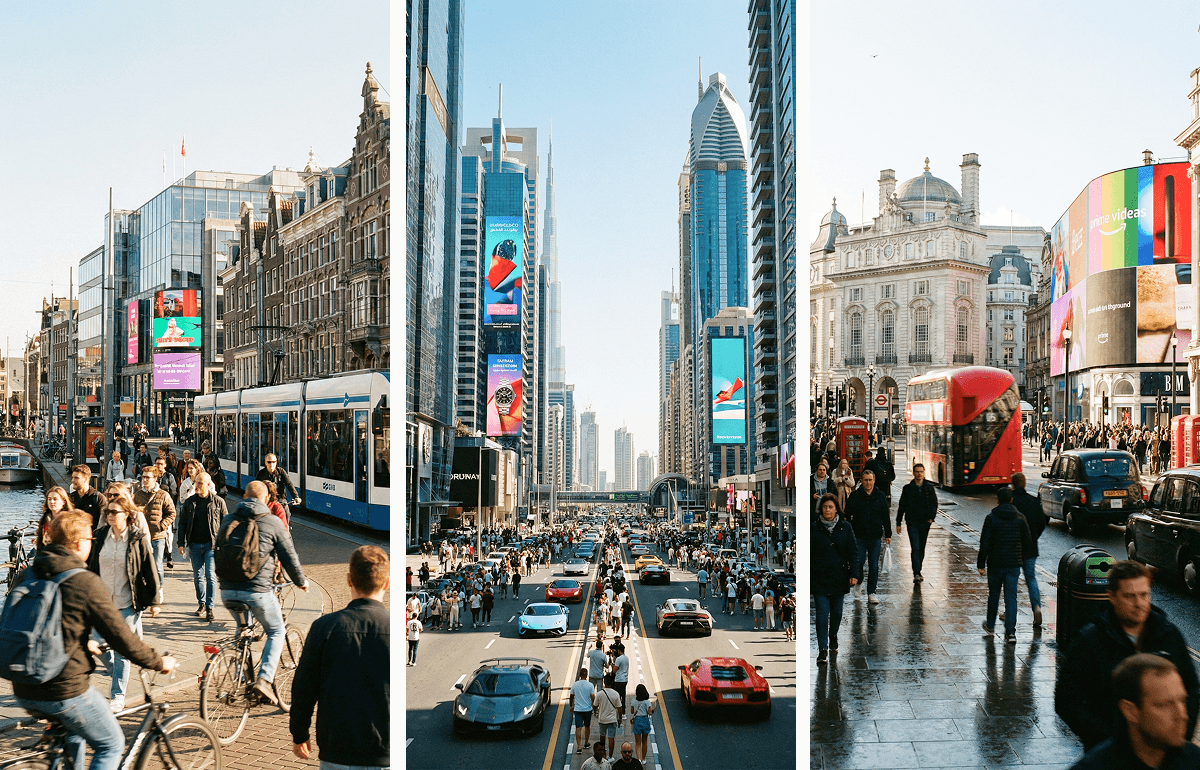
Gone are the days of siloed campaigns. Today’s leaders run globally aligned, regionally optimized campaigns.
Regional hubs (Amsterdam, Dubai, Singapore, Toronto) are the new control towers for creative consistency, data alignment, and performance reporting.
The result? Faster execution, higher ROI, and stronger brand equity. Inclusion-first design and micro-community engagement are now embedded into every regional rollout.
Regional Predictions for 2026
North America: The Proof-First Era
In the U.S. and Canada, measurement is king. CMOs are demanding dashboards, not decks.
OOH is now:
Cross-channel by default
Tied to business outcomes
Privacy-safe and bilingual (especially in Canada)
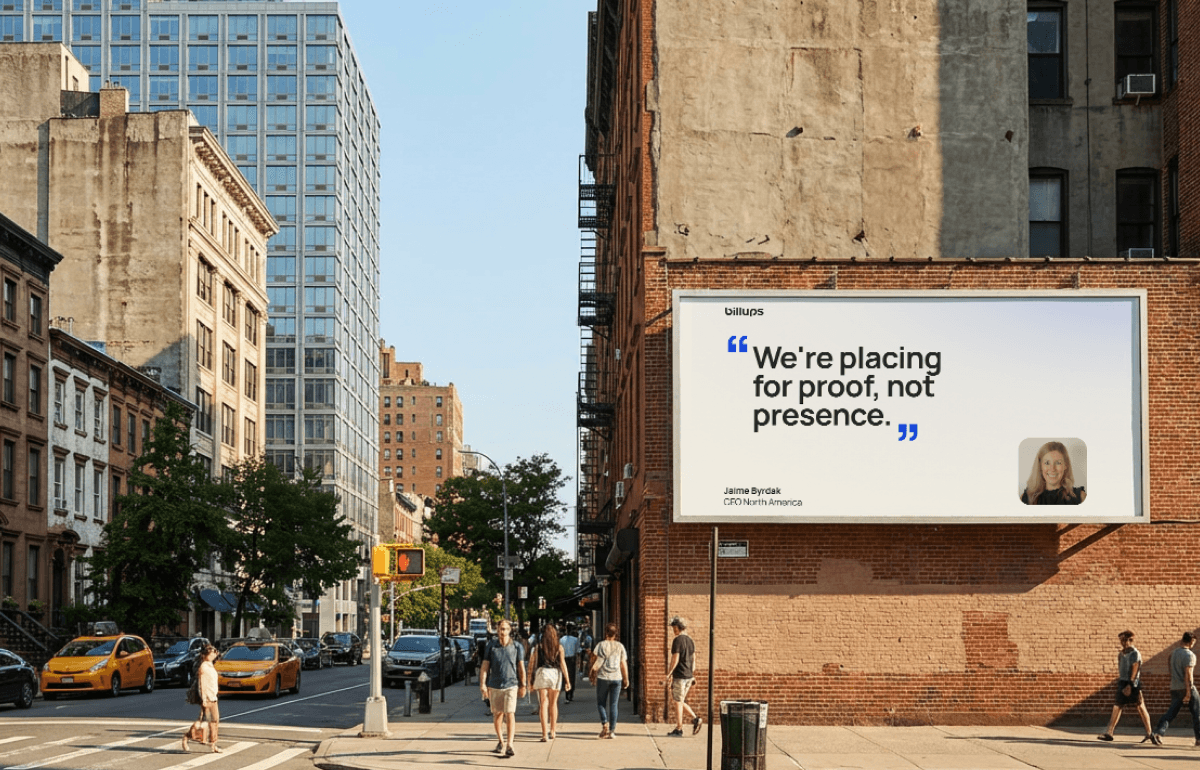
"It goes far beyond screen count. The beauty of our OOH capabilities lies in tracking and reporting what people actually do after seeing them. That’s the difference in 2026, we’re placing for proof, not presence," says Jaime Byrdak, CEO North America.
In New York and LA, B2B brands are leaning into programmatic DOOH to reach professional commuters. In Mexico City, QR-based OOH drives fintech adoption with mobile-first integration.
EMEA: Regulation Sparks Innovation
Europe is setting the global benchmark for carbon-scored OOH.
In London, over 65% of screens are digital, and every campaign must earn its space. In Amsterdam, AR pilots and transit-data triggers are now routine. Dubai’s dual-language, real-time integrations are a masterclass in cultural nuance.
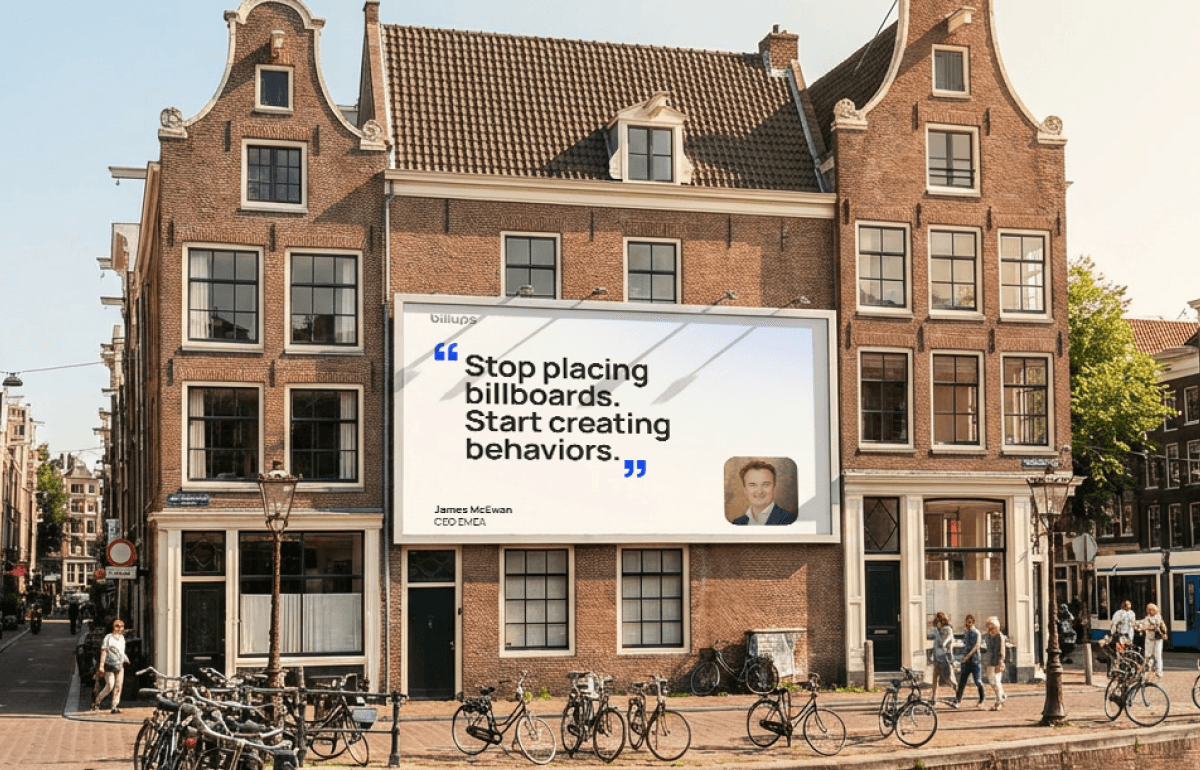
"When our team scrutinised the need, we said: Let’s stop placing billboards and start creating behaviours. Historically, many outdoor plans acted like print. In our increasingly dynamic world that ends now," says James McEwan, CEO EMEA.
We’re also seeing more creator-led DOOH collaborations, where influencers become embedded into retail and outdoor journeys.
APAC: The Speed Lab
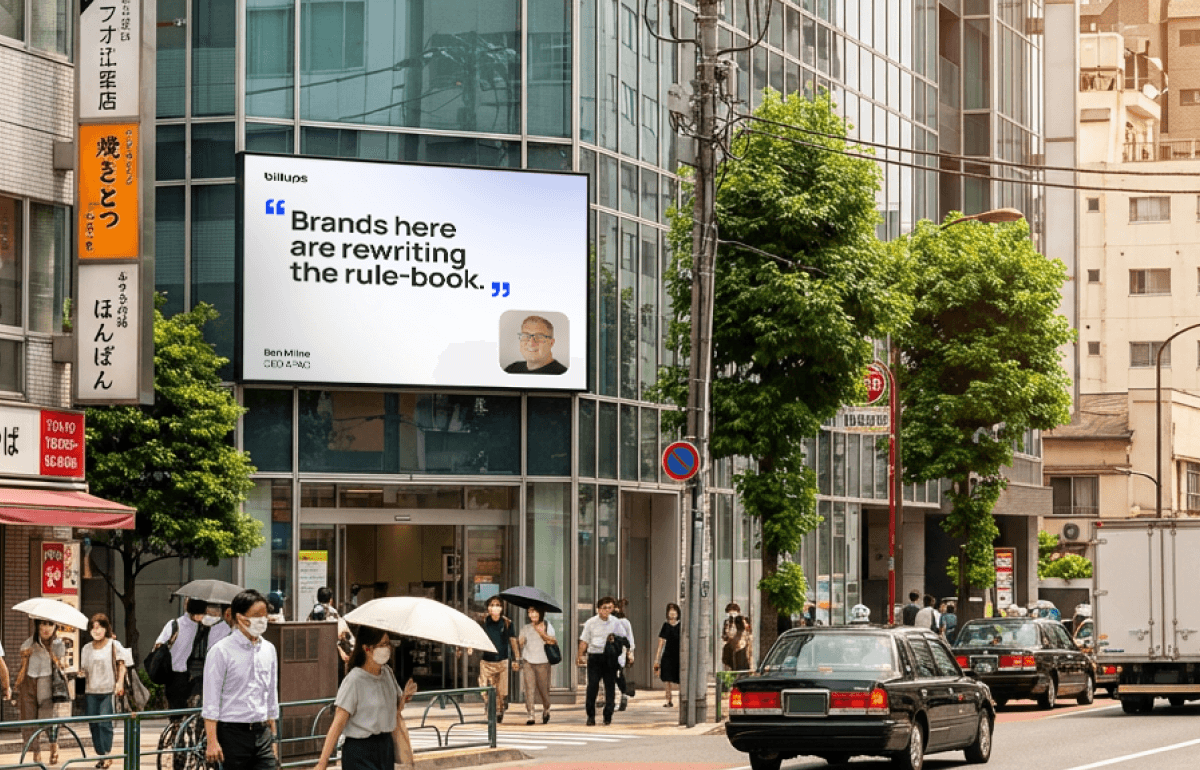
"If you’re buying OOH as a static poster, you’re already behind. In APAC, we’ve stopped talking about 'OOH' and started talking about 'people in motion'. Brands here are rewriting the rule-book," says Ben Milne, CEO APAC. If you're buying OOH as a standalone media buy, you're missing its role as a dynamic, connected component in the omnichannel journey. In APAC, the conversation is no longer about 'OOH'; we have started talking about 'people in motion'. Brands here are rewriting the rulebook," states Ben Milne, CEO APAC
Singapore is syncing OOH with APIs from transit, tourism, and weather systems. In Malaysia, brands now deploy cross-language, multi-market campaigns in weeks, not quarters.
Australia’s solar-powered screens and New Zealand’s climate-proof builds are setting a new sustainability baseline.
The culture of experimentation here is unmatched. Test-and-learn isn’t a buzzword; it’s a way of working.
What Brands Should Do in 2026
To win in this new OOH era:
Organize regionally, act globally
Invest in audience intelligence and synthetic modeling
Make dynamic and machine-readable creative non-negotiable
Tap into retail media and micro-moments
Build content for AI agents and intention-driven journeys
Collaborate with creators and communities
Demand carbon visibility upfront
Connect OOH to mobile and CTV stacks
The Risks Ahead
Regulation may slow inventory expansion
Attribution tech may lag behind expectations
Brands without dynamic creative will fall behind
Greenwashing scrutiny will increase
Programmatic talent remains scarce
Brands that avoid experimentation will lose momentum
But every risk signals opportunity.
The Outlook
The next two years will redefine OOH.
As audience movement, automation, intention-based planning, and carbon performance converge, OOH is earning its place next to mobile, search, and social in the media stack.
It’s not about billboards anymore. It’s about visibility, velocity, and verifiability.
The future of outdoor is smarter, greener, and global.
The question isn’t "Are you advertising outside?" It's: "Is your outdoor media working as hard as the rest of your stack?"
Talk to our global team of OOH experts and unlock the power of outdoor in 2026 and beyond.
Our news


